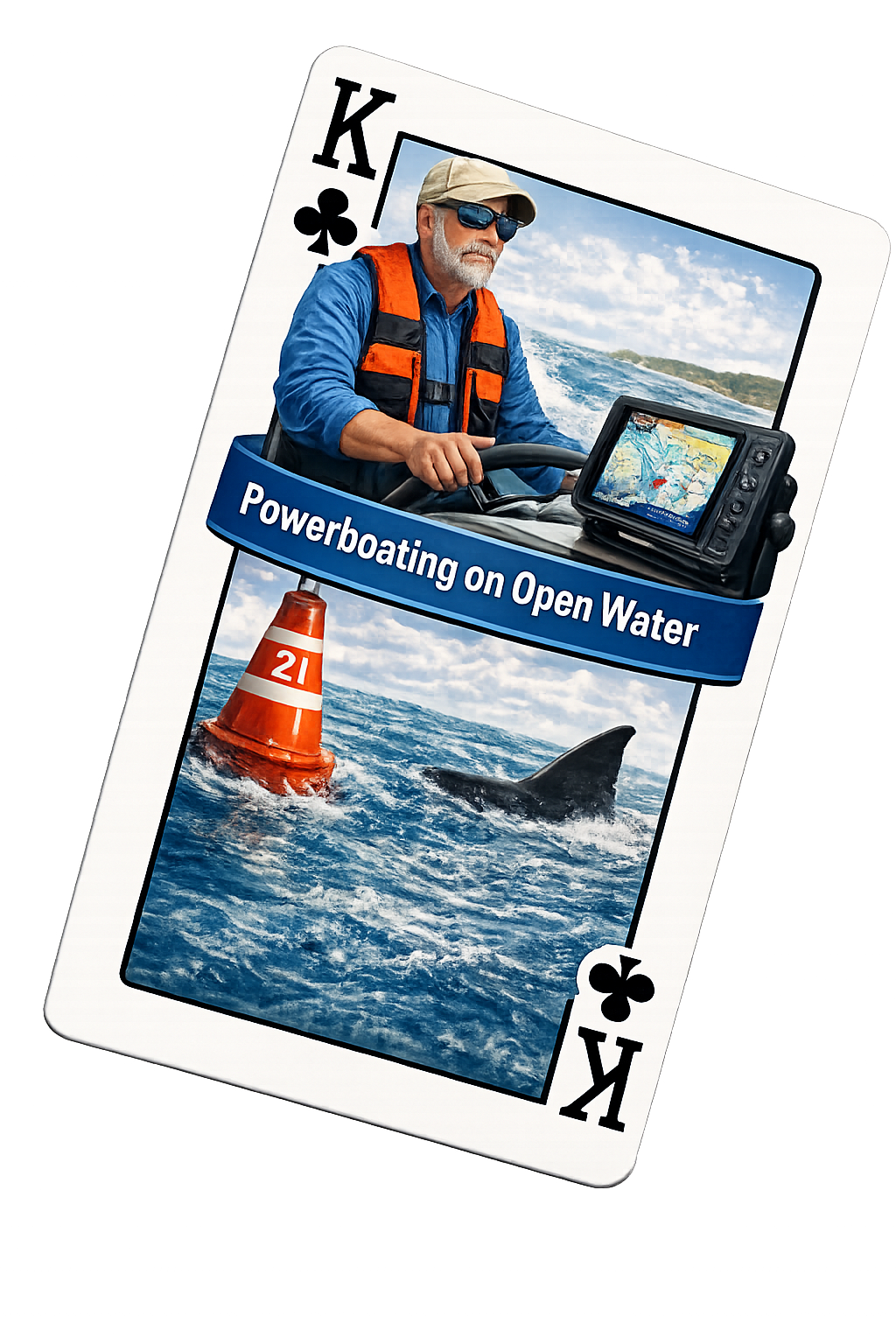
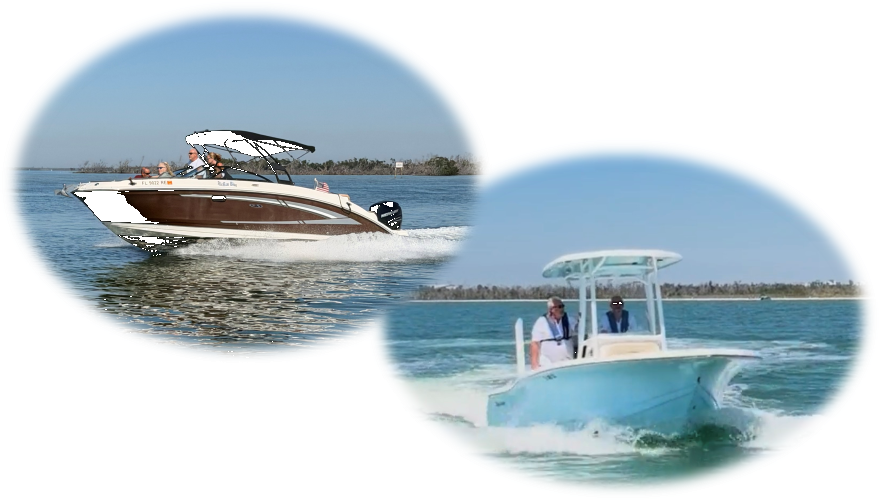
The Powerboating on Open Water Course is an advanced, hands-on on-water training program designed for boat operators who have developed fundamental boat-control skills and are ready to progress to more challenging operating conditions. The course covers Modules 3 and 4 of the National Safe Boating Council (NSBC) Boat Control On-Water curriculum.
Throughout this course, students receive professional instruction in advanced maneuvering, higher-speed vessel control, emergency maneuvers, situational awareness, and open-water operations. Training emphasizes real-world application, helping students develop the judgment, confidence, and practical skills necessary to safely operate a vessel in changing conditions.
The 1 Day 6-hour Powerboating on Open Water Course builds upon fundamental boat-handling skills and prepares students for more advanced vessel operation and real-world open-water boating conditions.
In this Powerboating on Open Water Course you will be awarded:
National Safe Boating Council (NSBC) Course Certification of Completion for Modules 3 and 4 valid for perpetuity.
BEST Powerboating on Open Water Course Certification of Completion valid for perpetuity.
Instruction is led by:
United States Coast Guard credentialed Captains
National Safe Boating Council (NSBC) Certified Instructors
Course Includes
NSBC Boat Control On-Water Training
Module 3 – Advanced Maneuvering
Module 4 – Open Water Operations
What You'll Learn
Advanced vessel maneuvering
Precision boat handling
Operating in changing wind and water conditions
Emergency stopping and avoidance maneuvers
Open-water vessel operation
Situational awareness
Maintaining safe speed and distance
Advanced helm control and decision-making
Passenger safety during open-water operations
Professional tips, techniques, and best practices developed through years of on-the-water experience
Prerequisites
Before attending this course, students must:
Successfully complete Fundamentals of Powerboating – Modules 1 and 2.
Successfully complete a NASBLA-approved Boating Safety Course (online or classroom).
Meet all applicable Florida legal boating requirements.
Who Should Attend
This course is ideal for:
Operators who have completed Fundamentals of Powerboating
Recreational boat owners seeking advanced skills
Experienced boaters seeking additional professional instruction
Operators transitioning to more challenging boating environments
Captains seeking additional practical boat-handling experience
Anyone wanting greater confidence operating a powerboat in open-water conditions
Take your boating skills to the next level. Powerboating on Open Water is a 6 hour advanced, hands-on training program designed to build the confidence and capability needed to safely operate a vessel beyond protected waters and into dynamic open-water environments.
Note: Schedule is dependent on weather conditions, class size, and participant experience
This course is the second segment of the National Safe Boating Council (NSBC) Boat Control On-Water Training Program and delivers Modules Three & Four. Instruction is led by NSBC Certified Instructors, ensuring nationally recognized standards and proven on-water training methods.
Prerequisite:
Successful completion of Fundamentals of Powerboating is required prior to enrollment. This ensures students have the foundational close-quarters control skills necessary to safely progress into open-water operations.
What You’ll Learn:
This course focuses on transitioning from controlled environments to open-water boat operations, where wind, current, vessel traffic, and speed introduce new challenges.
Participants will develop the critical skills needed to:
Safely increase speed and operate on plane
Maintain control in open-water conditions
Execute precise turns and controlled stops at higher speeds
Navigate wakes, waves, wind, and current
Identify and respond to developing risks and hazards
Training emphasizes situational awareness, decision-making, and vessel control in real-world boating environments.
Classroom Session:
Administrative Objectives
Graphics Overview
Course Objectives
Prerequisites
Operator Responsibility
Lookout Principles
Speed and Risk Management
Risk of Collision
Actions to Avoid Collision
Environmental Awareness
Equipment
Terminology
On-Water Training:
Vessel Performance and Acceleration
Trim and Efficiency
High-Speed Turns
Controlled Stops
Boat Handling in Wakes and Waves
Boat Handling in Wind
Boat Handling in Current
Emergency Procedures and Rescue Considerations
All training is conducted in a safe, controlled environment with a strong emphasis on proper technique, risk management, and crew safety. Participants operate vessels while wearing properly fitted life jackets and adhering to all navigation rules and safety practices.
Who This Course Is For:
Recreational boaters ready to advance beyond basic skills
Operators seeking confidence in open-water conditions
Individuals looking to safely operate at speed
Boaters preparing for more dynamic and challenging environments
At BEST – Boating Emergency Safety Training, we bridge the gap between basic boat handling and real-world boating performance. Our on-water training ensures you don’t just learn—you gain the confidence and capability to operate safely, efficiently, and decisively in open water.